


I can admit when I’m wrong. Sometimes. I’ve been wrong about a lot of things when it comes to wine, my studies are teaching me that. As my palate expands, I am learning to appreciate things I never thought I would, I’m looking at you port & sherry. But, I will hold fast to my guns when it comes to natural wine. I’m sorry.
What I’m learning is that it’s not just the actual wine I don’t like - but it’s fair to say I don’t like a lot of them - it’s the culture. I talk often about the elitism and inaccessibility of the wine world, but to me, the natural wine world is becoming just as intolerable. Maybe it’s just LA. But, it feels like we’re trading suits and sabers for ironic mustaches, Birkenstock slides, and Yeezy Gap shirts. The same interloper feeling I sometimes have in wine spaces is just evolving to a new oppressor. On one hand, it’s a good thing for the industry to evolve, especially when thinking about the Gen Z problem, but on another hand - it’s just insufferable.
So, this week, I want to debunk another great myth being told by the natural wine community. Spoiler: Pet-Nat’s ≠ natural wine. Can they be natural? Yes. But, their lore is one of the more fascinating natural wine marketing schemes I have seen.
Regional Spotlight: Santa Barbara, CA
Before I rally against the natural wine machine (again), I want to discuss my favorite California wine region.
When discussing California wine, what’s the first thing that comes to mind? Napa, Sonoma? These are fabulous wine regions, and deserve all the praise they are rightfully getting. But, and I know this isn’t revolutionary, for those of us that love the subtle flavors and high acid of french wine, we really don’t have to look much further than Santa Barbara.
Santa Barbara is a cool-climate California wine region where east-west valleys funnel Pacific fog, creating an extraordinary range of mountain climates. The region is like a needle in the haystack of California, and it’s all because of geography and its unique positioning to the Pacific ocean. Basically, it’s being cooled constantly allowing vines to mature a little slower than other parts of California, especially when looking at the Sta. Rita Hills.
Within SB, there are seven federally recognized AVAs (American Viticultural Areas), 265+ wineries, 75+ grape varieties, and over 10,000 acres of wine grapes. We are not discussing some unsung wine hero, but I do think it should be in the conversation more. Those AVAs include:
Santa Maria Valley: It’s cool, foggy and windy. They make amazing Pinot and Chardonnay, that to me, stands out in the California crowd for their structure.
Sta. Rita Hills: As mentioned, this is another cool destination, but what’s exciting is that they cultivate mineral-driven wines here, a true favorite of mine.
Ballard Canyon: This area is comparable to France’s Rhône Valley, so it’s no surprise that their standout grape is Syrah. I had one of my recent trip to SB and the pepper, herb, and blackberry flavors sold me.
Los Olivos: This is the home of Solvang, they make a ton of varietals and are known for experimentation. I’m going in a few weeks and will report back.
Happy Canyon: It’s where things get a bit warmer, they are known for richer, more concentrated wines, especially Cabernet Sauvignon and Cabernet Franc.
Santa Ynez: Ironically, this is a classified AVA and has smaller AVAs within it (many of the ones above)
Alisos Canyon: The newest AVA (2020), and very Rhône focused.
When it comes to soil, SB is very diverse. They have sandstone, limestone, clay, and so many others - it really is a choose your own adventure region. You can have a pinot from Sta. Rita Hills that tastes a world apart from one you may get in Solvang. That’s the fun part, everything in this region is about “where” and there really isn’t a unified taste or approach.
When thinking about grapes from Santa Barbara, I would look for Pinot Noir and Chardonnay from Santa Maria Valley and Sta. Rita Hills, and Syrah from Ballard Canyon and Alisos Canyone. It may completely change your thinking when it comes to California wine.
I went to Santa Barbara a few months ago, I just did the funk zone in the downtown area, that allows you to try lots of wineries from the region (tasting rooms), without ever getting into a car. Here were my standout producers:
Margerum Wine Company: Excellent Grenache and Syrah, very Rhône inspired
Riverbench: Their Chardonnay was a favorite among the whole group
Valley Project: This was our last stop, I can’t remember the exact wine I loved, but they have a great selection that takes you through the whole region
Wine In Culture: WTF is a Pét Nat?
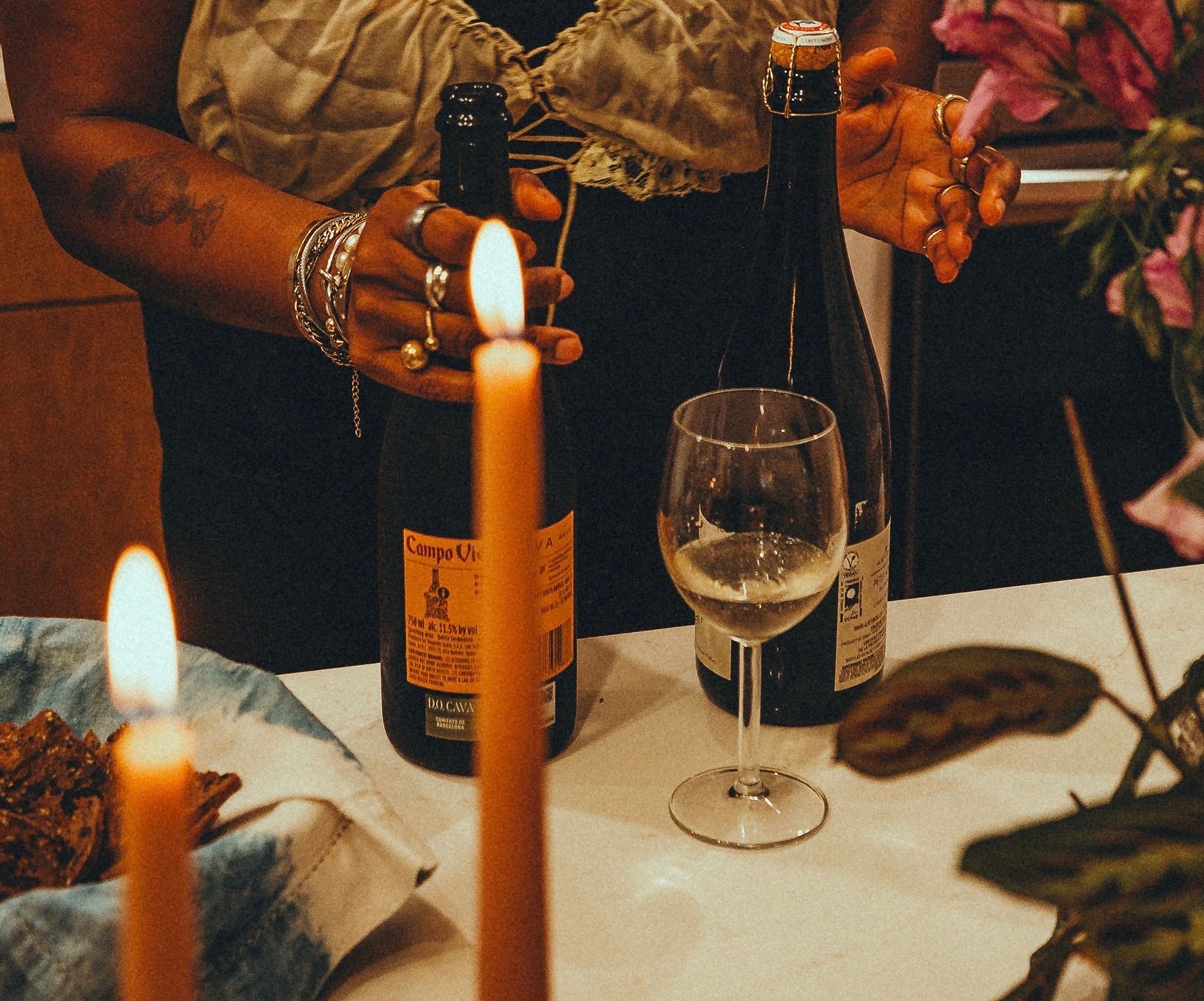
When we talk about wine trends, the first thing I think of is the pét nat. I remember going out to dinner with friends some years ago and one of them (a natural wine lover) confidently asked the waiter “do you have a pet nat?” I was so embarrassed. Ironically, the restaurant did and when they served it to us and I tasted it for the very first time, I was shocked. It was sparkling wine, but it had a funky-ness to it that felt like a cross between wine and kombucha. It was refreshing and I could detect some interesting flavors, but overall, I was just confused. Was it natural sparkling wine? Was it kombucha? What was I drinking?
Pét-nat stands for pétillant naturel, which is french for “naturally sparkling.” When it is made, instead of going through its full first fermentation (like Champagne for example) it is bottled right after the first fermentation starts. Therefore it does its first and only fermentation in the bottle where the yeast eats the sugar producing CO₂ and alcohol. Since the CO₂ is trapped, boom, you’ve got bubbles. Essentially, it’s a wine making method, so the name “Pet-Nat” tells you nothing about the wine whatsoever. It certainly doesn’t mean that the wine is natural.
Pét-nat isn't some new natural-wine invention - in fact, it doesn’t even fit the criteria of a natural wine (more on that later). In many places, it's an old technique that got rediscovered and rebranded for a new generation (read: marketing). However, there are some things that distinguish it from tank-method (prosecco) or traditional method (champagne) sparkling wines:
Softer Bubbles: There is less pressure in the process
Less Lees Management: Lees, the dead yeast that collects as a byproduct of fermentation can add flavors of toasted bread, biscuit, almond to wine. They are mixed in or removed in the process, but since it’s all happening in the bottle, we are basically on our own.
Cloudiness/Sediment: There’s less opportunity for filtration
More Primary Fruit: Shorter aging allows for the primary flavors to stand at attention, but I will say, what we love about Champagne are the complex flavors that come with aging.
A Touch of Sweetness: There’s more residual sugar, it has no where to go.
Overall, the process is less controlled than other sparkling wines, this is probably why the natural community has flocked to it. But, “pét nat”doesn’t mean it’s free of sulfites, pesticides, organic or other key “natural” attributes. It’s simply the way it’s made. Therefore, if the above attributes appeal to you, combine that with your favorite grapes, regions, or soil and you can try something wholly different than what’s typically in your glass.
When it comes to production, they are made all over the world, but France is probably the biggest producer, especially in the Loire Valley. Italy comes in second, but they don’t always use the name pét-nat, most times they go by metodo ancestrale, rifermentato in bottiglia, sui lieviti and frizzante (most popular). After those two power houses, production is gaining steam in the US (California, Oregon, New York), Austria, Spain (especially Catalonia), Australia, New Zealand, Germany, and Georgia.
The important thing to note is that pét-nat’s are not going to be found at just any liquor store. They are for a very specific wine drinker, and they usually carry a hefty price tag in comparison, just like other wines that have been adopted by the natural community. I think this is the reason why I resist it as much as I do. There is no amount of fun branding that can make me feel otherwise. However, I will say, I do enjoy a pét nat. They are distinctive in taste, and if you love a specific varietal, it’s exciting to try it with a different expression. If you are interested, here are some options that come highly recommended as a good entry into the wine making method:
Folicello Lambrusco Pét-Nat — Emilia-Romagna
Sequerciani Vino Frizzante Rosé Ancestrale — Tuscany (Winemag Guide 2026 named it Italy's Best Pét-Nat)
Rallo La Maggiore Pét-Nat — Sicily
Il Farneto “New Player in Town” Trebbiano Ancestrale — Emilia-Romagna
Orsi Vigneto San Vito “Sui Lieviti” Pignoletto — Emilia-Romagna
Overall, it’s a wine making method, but it has a great, catchy name. So, while it doesn’t mean that it will be “natural” by definition, it has been adopted widely by the community, both domestic and abroad. It’s still odd to me that one would order a wine based on the wine making method, but a lot of things are odd to me in the natural wine world. If you haven’t tried one, I highly recommend you do. If you are a fan of them, just know I am too. My hope is that by you knowing the facts, you will be all the better at ordering them.
What’s in My Glass: Wavy NRG Pét-Nat (2023)
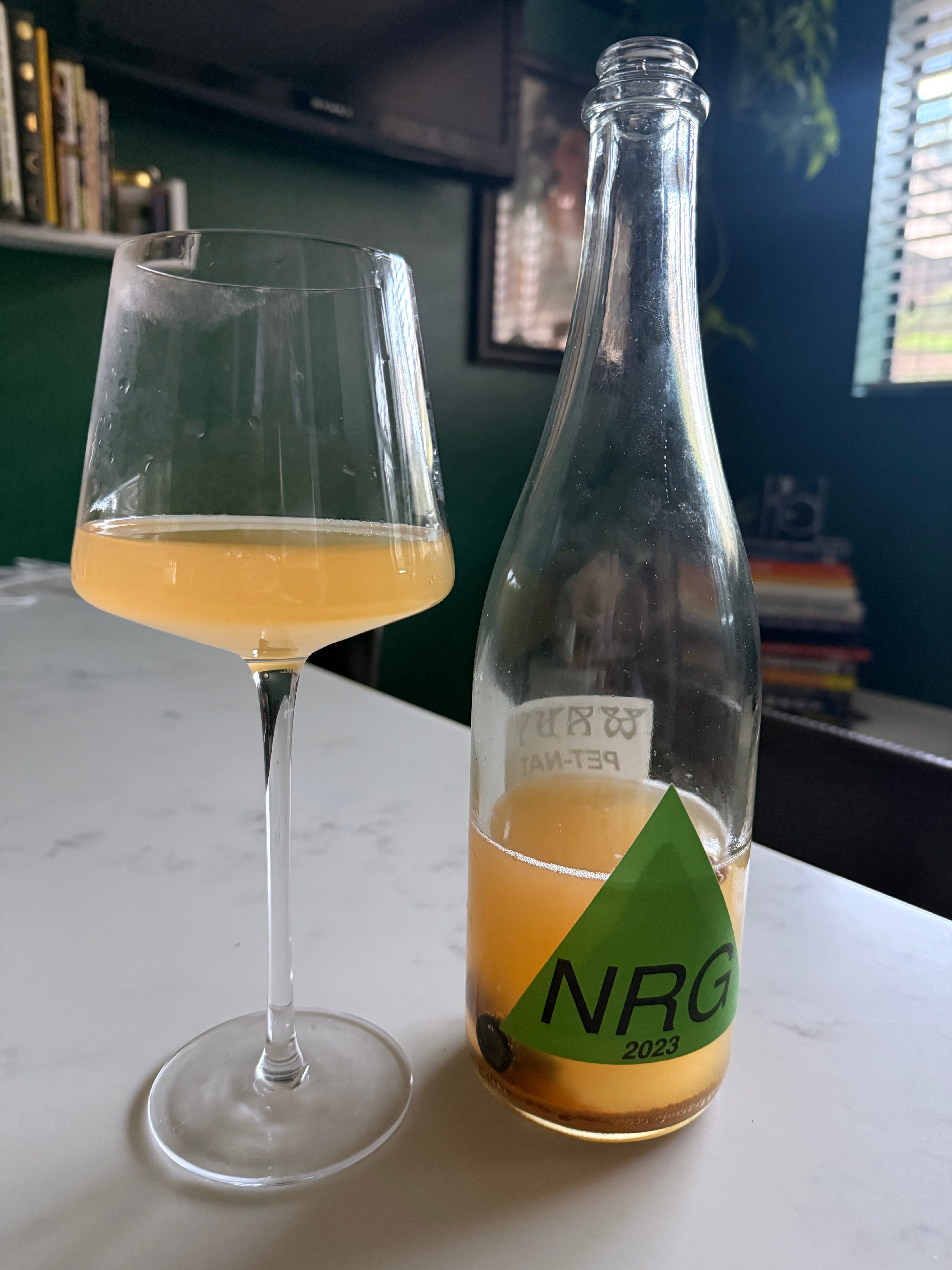
It only felt right that I go out and have a pét-nat this week. So, I ventured to Wine+Eggs in Burbank to grab a bottle. They have a huge selection between $22-40, lots of different varietals, most being from California. I grabbed two options, both chenin blanc dominated, to compare and contrast. This one won me over immediately, well, not immediately because upon opening it I lost half the bottle to my counter top. That’s one thing they don’t warn you about, open these things over the sink.
But alas, it had bright flavors, gentle acidity, and it had a saltiness to it that I really loved. But, the flavor that stood out to me the most: jalapeño! Never in my life have I had a chenin with notes of jalapeño. It was easy to drink and every time I took a sip, it felt like I was tasting something new. That’s the fun part about a pét-nat. There was a good amount of sediment, but I was careful not to pour it into my glass.
You’re probably wondering what’s that black thing at the bottom of the bottle…in addition to behaving like a grade school volcano upon opening, it also broke my favorite wine stopper in half when I tried to close it for later. These things are a liability. But, I still somehow enjoyed it, so now you know it’s actually that good. Also, did I mention that this one is in fact a natural wine by their loose definition? Go figure.
More on the wine below, courtesy of the producer:
Country: USA
Region: Sonoma
Type: Pet-Nat
Grape: Chenin Blanc/Muscat/Chardonnay
Wavy Wines is a Los Angeles-based natural wine project formed by Jude Zasadzki & Eliot Kessel. They make wine from organic grapes, using only native yeast.
Organic/biodynamic farming. Wavy’s pet-nat is made from 80% Chenin Blanc, 15% Muscat, and 5% Chardonnay grapes. The grapes are sourced from organically farmed vineyards, with the Chenin Blanc and Muscat contributing aromatic complexity and the Chardonnay adding structure. In the cellar, the grapes undergo a two-day maceration on their skins before being pressed and fermented in stainless steel tanks. The wine is then racked, and still-fermenting Chardonnay juice is added before bottling in October 2022. Fermentation finishes in the bottle, creating natural effervescence. The wine is bottled unfined, unfiltered, and with no added sulfur.
NRG has a hazy, pale yellow hue and lively effervescence. Aromas of lemon, lime, and floral notes. The palate is salty, refreshing and crisp, with notes of Bartlett pear and Fresca soda, leading into a clean, mineral-driven finish.
The best take away… open with caution! At least you didn’t break the cute wine glass.