


We’ve officially reached the dog days of summer. When I was a kid, I used to get a little sad that summer was coming to an end. Now that I’m in the insane time warp that is adulthood, I can’t wait for summer to end, fall means cooler weather, better clothing choices, and nights on my couch drinking red wine wrapped in a blanket. But here’s the thing: I never stopped drinking red wine. Maybe it’s the contrarian in me (I am in fact an Aquarius), but I really don’t believe there are specific seasons for specific wine. If you want it, drink it. Or even better, pair it with your food or my personal favorite, your mood. So this week, we’re throwing out the playbook and pushing those white and rosé bottles to the side, it’s time to end this summer on a high note, it’s time for a red hot summer.
Regional Spotlight: Six Weeks of South Africa - Heme-en-Aarde
Before we get all red and hot, let’s check back in to South Africa, and a region that pairs very well with my red wine agenda. This week we are visiting SA’s answer to Oregon’s Pinot Noir, Hemel-en-Aarde. It made the wine world realize South Africa could produce world-class Pinot Noir and Chardonnay, not just good versions "for the price." Today, it's one of the country's most prestigious fine wine regions and a benchmark for cool-climate winemaking.
First the name, Hemel-en-Aarde translates to "Heaven and Earth" in Afrikaans, a name inspired by the dramatic valley where mountains rise so high they seem to meet the sky. It’s located in Walker Bay, 90 mins from Cape town, known for its Mediterranean climate. It has one of the strongest maritime influences in South Africa, making it one of the coolest wine regions in the country.
Unlike many New World regions that chase ripeness and power, Hemel-en-Aarde is all about: precision, freshness, restraint, minerality, and balance. It’s one of the few places outside Burgundy that serious Pinot and Chardonnay lovers consistently seek out. They also have three appellations within the region:
Hemel-en-Aarde Valley: Closest to the Ocean, coolest, wines have bright acid and are very floral
Upper Hemel-en-Aarde Valley: Slightly warmer, wines are richer but still very fresh
Hemel-en-Aarde Ridge: Highest elevation, wines are very structured and mineral driven.
Keep those in mind when you are in the wine shop. And if you are there, you will want to look for their signatures:
Pinot Noir: This is where they shine, it’s all the things you would suspect from a traditional Pinot from Burgandy but with additional flavors of tea leaf and spice.
Chardonnay: You’ll get a mineral forward, almost salty style from here, but with a touch of oak, balanced with bright acidity.
As for producers, I have one for you this week: Tesselaarsdal Wines. Founded by Berene Sauls in 2015, Tesselaarsdal is not only one of the region’s most exciting Pinot Noir and Chardonnay producers, it is the first wine brand wholly owned by a descendant of slaves in the Hemel-en-Aarde area. I haven’t had a chance to try their wine yet, but I will be on the hunt and I will report back, if you want to give it a shot it’s available on Vineyard Brands.
Wine in Culture: The Best Red Wines to Drink This Summer
Will the real red wine lovers please stand up? I am a diehard red wine lover, I wear my red stained lips like a badge of honor and I actually refused to drink white wine until I was at least 25. I used to live by the iconic Bette Davis quote:
"Never, never trust anyone who asks for white wine. It means they're phonies."
But, as I got older, I learned to love and appreciate white wine. In fact, I may have overcorrected. I started to almost exclusively drink white wine year-round when I first moved to LA, every day is summer right? It wasn’t until I started my wine studies that I realized, it’s never been about white vs. red vs. rose/orange - it’s all about the wine’s structure. To be clear, it’s about the wine’s body, tannin, alcohol, and serving temperature.
Red wines can work in warmer temperatures if they have the following attributes:
Low tannins - it’s the tannins that make your mouth feel dry, and there is nothing worse than sitting out in the hot sun with cotton mouth.
Bright Acidity - it’s refreshing! The same reason we love lemonade on a hot summer day.
Lower Alcohol - The alcohol can make wine feel heavier, that low alcohol quality to certain white wines is what makes us so eager to grab another glass by the pool.
Light Body - Another thing that will assist in the wine feeling less heavy, giving you the easy drinking feel.
For this next section we’re going to discuss serving temperature and I’m going to hold your hand: You have likely been drinking your red wines too warm. Meaning, the temperature is not as intended and you could be missing out on some key flavors. I am a BIG stickler for wine temp, this predates my official wine journey, nothing grinds my gears more than tasting a wine (usually at a restaurant) and immediately sensing that the temp is off, this is usually the case for red wine. “Room temperature” originally referred to 16th-century European castles around 60–65°F, not a modern home at 75°F. Your reds should almost always be cooler than you think. I now store my wine in a cooler at 60°F, but if you don’t have one, the best trick is to let your reds hangout in the fridge for 20 mins before serving (Note: if you leave it in too long and the wine tastes bitter, just let it warm up a bit, you’ll be fine). Even the most full of full body reds shouldn’t be served over 65°F. But, here’s the fun part - most light body reds are best around 50–55°F, making them a perfect refreshing summer companion.
Here’s my list of “summer reds” that you should try, after they spend some time in the fridge of course:
Gamay: Juicy, light, low tannins, and bright cherry flavors. Pairs great with burgers.
Pinot Noir: You knew this was coming. But, I would focus on bottles from Oregon or Hemel-en-Aarde specifically. It’s silky, earthy, and elegant. Give it a shot with grilled salmon.
Grenache: It doesn’t just make great rosé, its red expression can be light and fruit forward, especially from Spain, Australia, and Southern Rhone.
A few other grapes to consider are Frappato, Cinsault, Mencía, and Zweigelt, but they are less widely available.
And with that, I officially declare the end of white wine/rosé + summer propaganda. Give it a try at your next pool party or cookout and let me know how it goes.
In My Glass: Succés Vinicola Experiencia Parellada
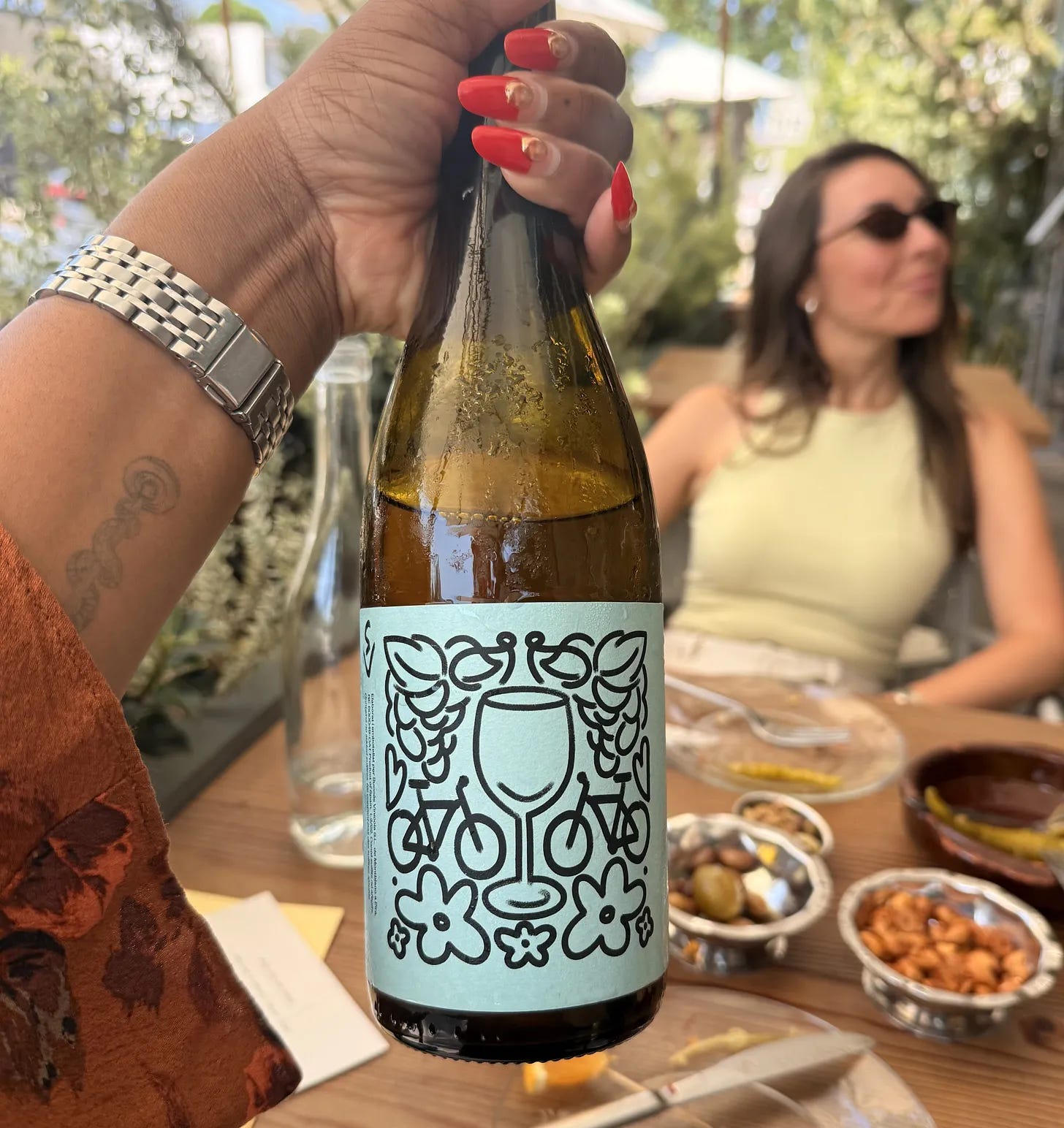
This past Sunday I took part in the age old summer tradition of day drinking whilst sitting at an outdoor cafe, talking about life and creative pursuits. It was absolutely perfect. But, what made it memorable? It was a heavy pour of Succés Vinicola ‘Experiencia’ Parellada. This was my first time having Parellada as a single varietal and I must say, I have been missing out. For those that don’t know, Parellada is a classic Spanish white wine grape from the Catalonia region, along with Macabeo and Xarel·lo, it is one of the three core grape varieties used to produce traditional Spanish sparkling wine, Cava. But clearly, it’s time that this grape steps out of the proverbial shadow of sparkling wine.
This wine was served ice cold, and while it does have a haziness to its color, it drinks with perfect clarity and direct flavor. Speaking of color, it’s an orange wine that enjoyed some time on the skins, but if you are orange adverse this really drinks like a white wine. Here’s how it’s described:
40-60 year-old bush trained Parellada grown in calcareous clay... Success Vinicola is amongst the first producers to make a still Parellada and is arguably the benchmark producer for the grape. Traditionally one of the main grapes for Cava, Parellada is a late ripening variety that likes high altitudes (it only thrives above 400 meters). Typically picked in late Oct, pressed, and given 12 hours of skin-contact before spontaneous fermentation in stainless steel. Fresh, lively, and bright.
I would also like to add that Succés Vinícola is woman owned and values low intervention.
To me, it is a quintessential summer wine. It’s meant for easy drinking, but has rich aromatics, and has well balanced (almost silky) acid. Also, it has an ABV of 11%, making it perfect for a lazy Sunday when you want to have a good night sleep after. You can find a bottle of this for $15-20, which is insane because I paid $17 for a glass, so don’t be like me and buy the bottle instead and go enjoy a lazy summer Sunday of your own.
This was very informative… I now feel seen and not ridiculed for putting my red wine in the refrigerator before drinking it. I’ve done this for years and most “supposedly” people in the know, have always frowned upon me for that.
I love a chilled red... and when it's got a touch of carbonation on top? I lose my mind! Absolutely delicious!