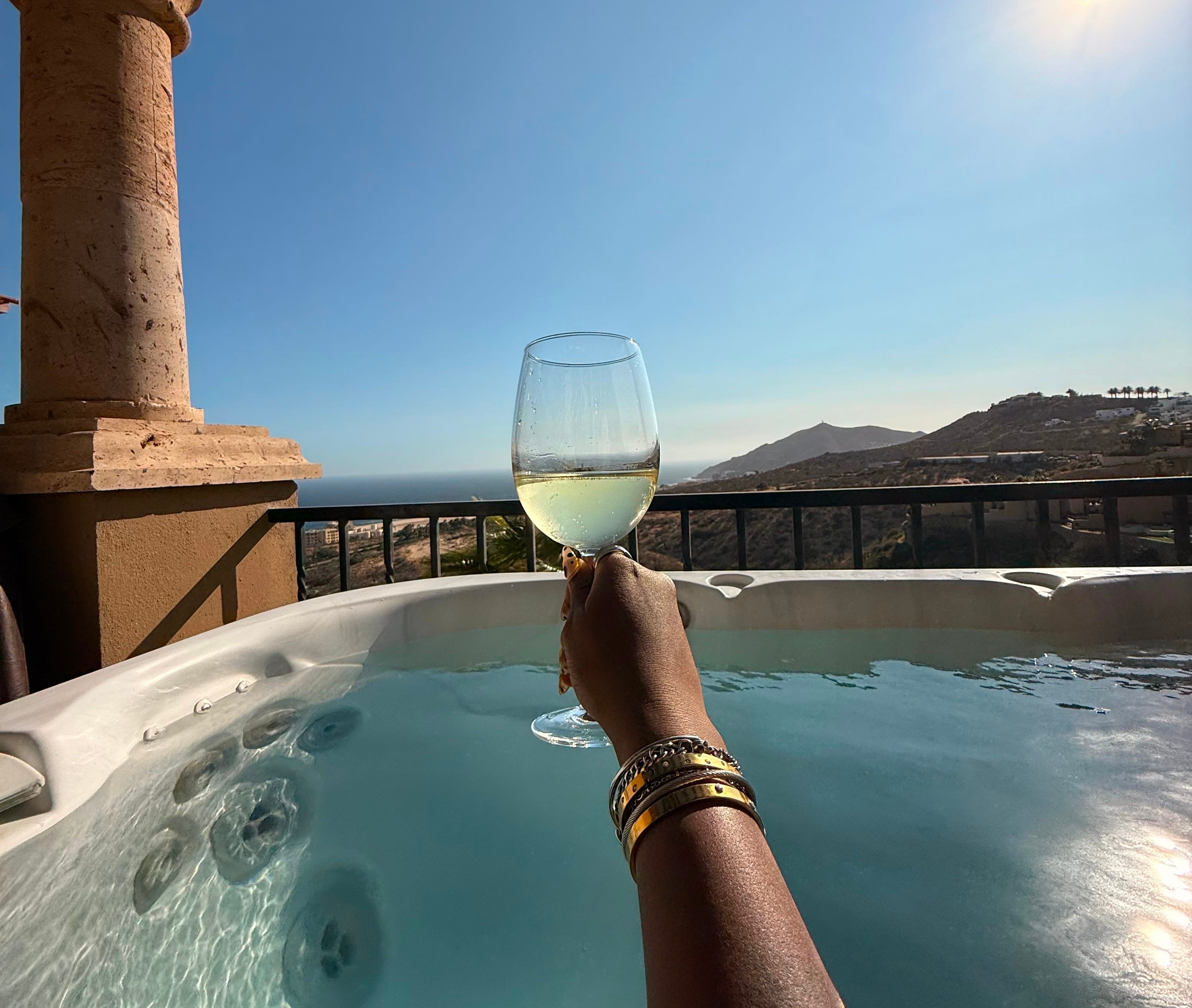
Like most people, my introduction to wine came from boxes, impossibly cheap bottles, and sangria if I was lucky. It’s a miracle I can even stomach drinking wine today. But, like most Americans, my journey to wine began on the domestic path, which means I drank a lot of Chardonnay and Merlot. It represented my entry point into the world of wine, it will always have a special place in my heart and at my table. Today, Chardonnay is more versatile and dynamic than ever before, but yet…most people refuse to drink it. It’s safe to say, Chardonnay is having a serious PR problem.



What exactly did Chardonnay ever do to us? Let’s get to the bottom of the Chardonnay disdain, and possibly, hopefully, find a way back to our beloved grape.
Regional Spotlight: Five Weeks of Georgia - Imereti
Before we talk all things Chardonnay, we’re back in Georgia this week because there’s another wine region that must be on your radar. Imereti challenges the assumption that Georgian wine always means deeply colored, tannic amber wine. Its signature grapes include Tsolikouri, Tsitska, and Krakhuna, and traditional wines often use less grape skin and stem material than Kakhetian qvevri wines to distinguish themselves. To me, they are highly aromatic and easy drinking wines that are consistently good, especially their blends.
Imereti is located in western Georgia and despite it being the homeland of the country’s best (my opinion) white grapes, it’s an exceptionally humid region. This creates some challenges for wine growers, but to me, it makes for a very unique white wine experience, especially in terms of texture and body. Remember the qvevri from last week? In Imereti, they're traditionally called churi, it’s essentially the same thing, the only difference comes in how they use it. By using less grape skin (what makes the white wine orange/amber) and stem material, their wine retains a lot of its white attributes, including its color. Although, in my opinion, they still have a slight hint to them and due to their fermentation process, a fuller body.
When looking for varietals from Imereti, here are the grapes I would look out for:
Tsitska: Bright, with crisp high acid, I usually see this one in blends.
Tsolikouri: This was the grape that started it all for me. You will find many variations of this one. It can be fresh and floral or textured. Expect flavors of melon, citrus, and sometimes honey.
Krakhuna: This is their full body white grape, it’s always rich with flavors of ripe fruit, and so much honey.
And, because no wine region is complete without at least one red varietal, make sure you check out Otskhanuri Sapere, it’s inky and deep with lots of structure and tannin.
When it comes to Imereti, I love the single varietals, but they often blend all three of their signature white grapes and that’s my absolute favorite. You get the high acid from the Tsitska, the floral qualities of the Tsolikouri, and then the richness of the Krakhuna. I’ve mentioned them before, but check out Baia’s white blend to give it a try.
Wine in Culture: Chardonnay Deserves Better
When it comes to Chardonnay, we are literally throwing the baby out with the bath water. There’s so much to love about this grape, it’s versatile, adaptable, resilient, and has a wide range of flavors and aromas. But, here’s the problem: One style (primarily from California) became the shorthand for the entire grape. Chardonnay become synonymous with heavy, buttery, very oak influenced wine - but that’s only a small part of the story for this grape.
Most people know and love Chablis, only a few people know that it’s made from Chardonnay grapes. This perfectly showcases how versatile the grape can be. It couldn’t be more different than the Chardonnay we grew up with. It has mineral qualities, lots of citrus, and the body is not nearly as heavy. It’s actually become the hallmark of what Chardonnay can be. When I was recently tasting in Santa Barbara, I met a few wine makers that immediately after recommending their Chardonnay followed it quickly with “but it’s Chablis-style!” It’s clear California is reacting to our change in taste, I’m seeing it all over bottles these days, pleading with consumers that their Chardonnay is different. If a different Chard experience appeals to you, because I have it on good faith that’s the problem here…this is what you should look for on the bottle or ask your sommelier/wine shop expert:
“Unoaked” or “stainless steel”: This will signal that there won’t be oak flavors like vanilla or toast.
“No malolactic fermentation”: That butter that you hate so much? It comes from malolactic fermentation, and softens the acid in wine leaving us with a creamy, buttery taste. Without it you’ll get sharper acid, and there are tons of Chardonnays on the market today without it.
Citrus, crisp, bright, or mineral: This could signal a fresher style, but could still have the malolactic fermentation so be careful with this one.
The biggest red flags on the label can include phrases like: “Buttery” (just avoide the brand Butter), “New Oak”, “Vanilla” and “Barrel Fermented.”
Now that you know what to look for, here are some other regions doing interesting things with Chardonnay, outside of Chablis, my favorites are:
Mâconnais in Burgundy: I’ve had some amazing Chardonnays from here, they are fresh and very fruit forward, they sometimes use oak barrels, but it’s very restrained and possibly not new oak. Look for Macon-Villages.
Willamette Valley: Oregon produces amazing cool-climate Chardonnay, lots of acid and hardly any buttery or oaky taste.
Sta. Rita Hills and Santa Maria Valley, California: I recently visited and it feels like the whole region is trying to distance themselves from Chardonnay’s bad reputation, I had some lovely fruity and saline like Chards there. There’s still some oak fermentation but it feels very restrained.
A few other regions to explore for different expressions:
Adelaide Hills, Australia: lean and precise
Limarí Valley, Chile: crisp and mineral
Hemel-en-Aarde, South Africa: mineral and textured
Marlborough, New Zealand: bright and fruity
Yarra Valley, Australia: elegant and balanced (cool climate!)
Casablanca Valley, Chile: fresh and citrus forward (especially lemon)
There is a big world of wine out there, Chardonnay is a legendary part of that world and does not deserve to be taken down by a few winemakers who happen to love a stick a butter. This whole thing is about exploring, having fun, and finding a sip that leaves you feeling inspired. Don’t give up on Chardonnay.
What’s in My Glass: Historic Series Madeira
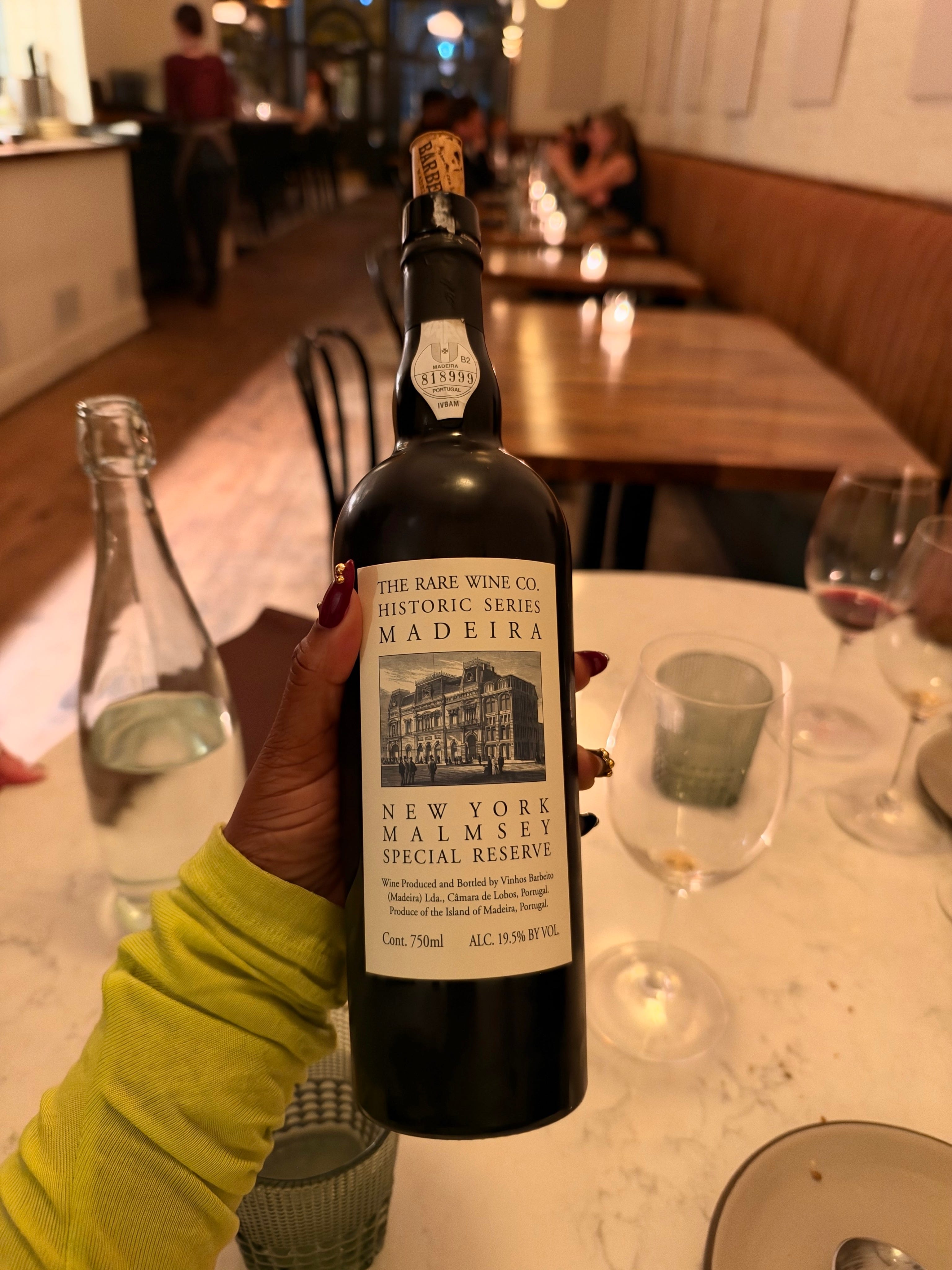
I’m currently in Chicago. I’m going to spend a weekend reconnecting with my high school girlfriends (hello, Five Star Weekend) and to catch some extra family time. My parents have determined that there is no need in trying to fight it, I am extremely bougie. For our one night together before I head to a Michigan lake house, they booked a reservation for us at John’s Food + Wine in Lincoln Park. I felt so seen. This was my kind of night, and one of the best meals I’ve had this year. But, what made it extra special was making friend’s with their sommelier and getting their seasonal sundae on the house with a very special pairing.
Let me pause for a moment. I know dessert wine isn’t for everyone. But, when it’s paired right it can be the perfect cap to a meal. This was one of those nights. Our excellent sommelier gave us The Rare Wine Co. Historic Series Madeira New York Malmsey Special Reserve. I’m not going to go into the history of Madeira and what makes it so special (a dessert wine issue is on the way), but just know that this was one of the most special pours of the night. It was nutty, well balanced, had just the right amount of sweetness, and a lot little spice. With our creme fraiche sundae, the sweetness evened out considerably and it became perfectly spicy. My parents loved it, I loved it, and we all left feeling like we had an amazing culinary experience. That’s what dessert wine can do for you. Give it a shot the next time you are being decadent and having a rich dessert. I promise, you will thank me.